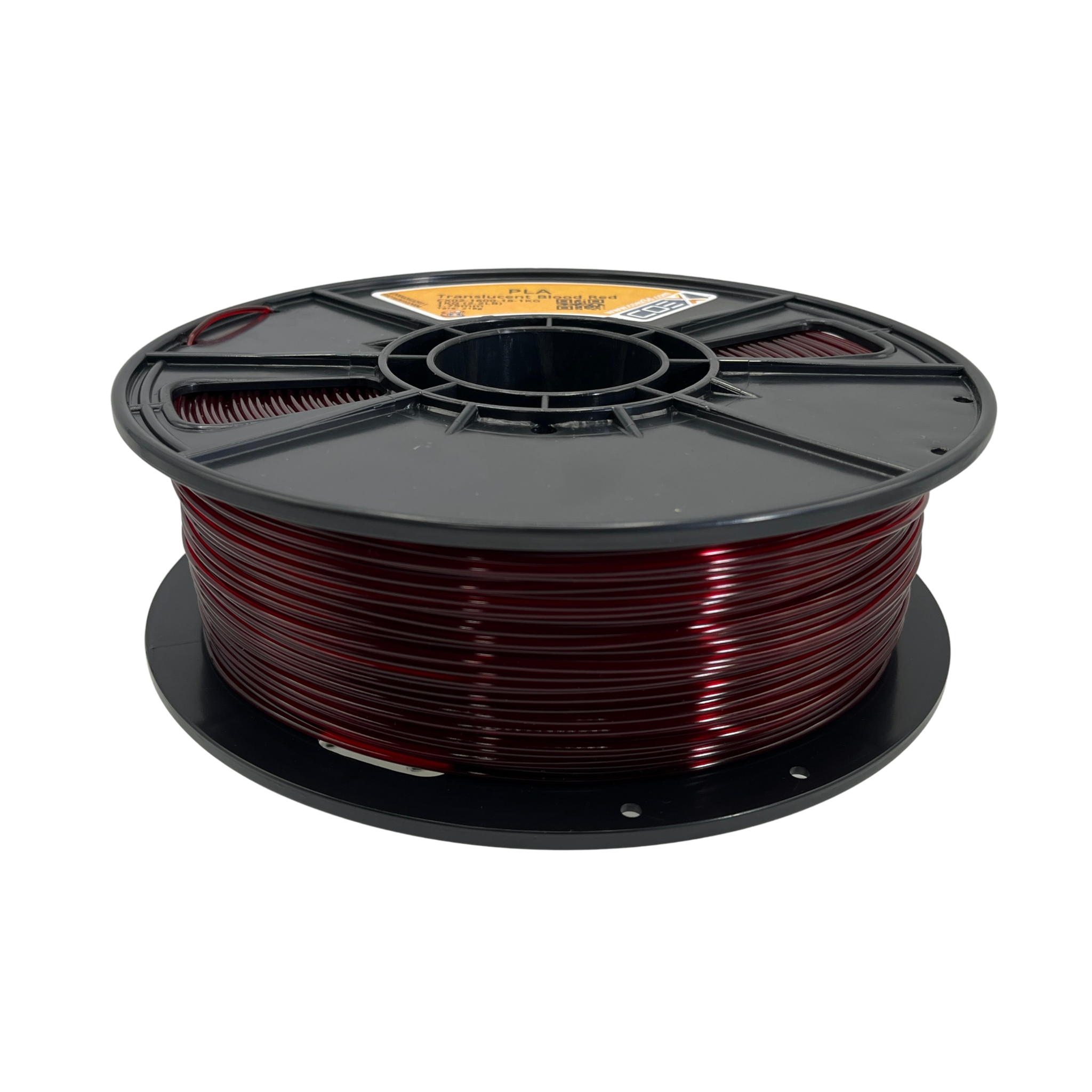
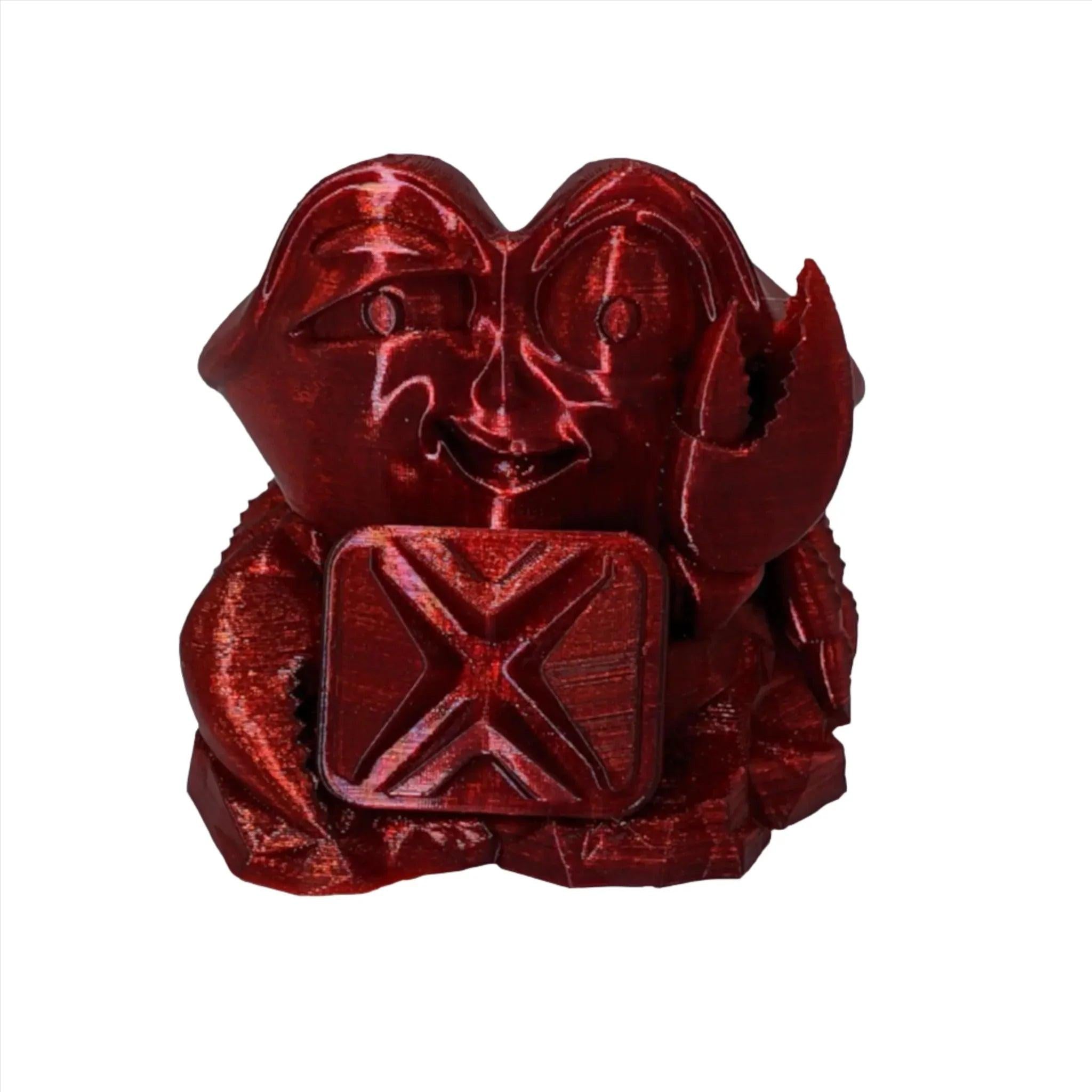
Translucent Blood Red PLA

HEX #610003TD 11.1

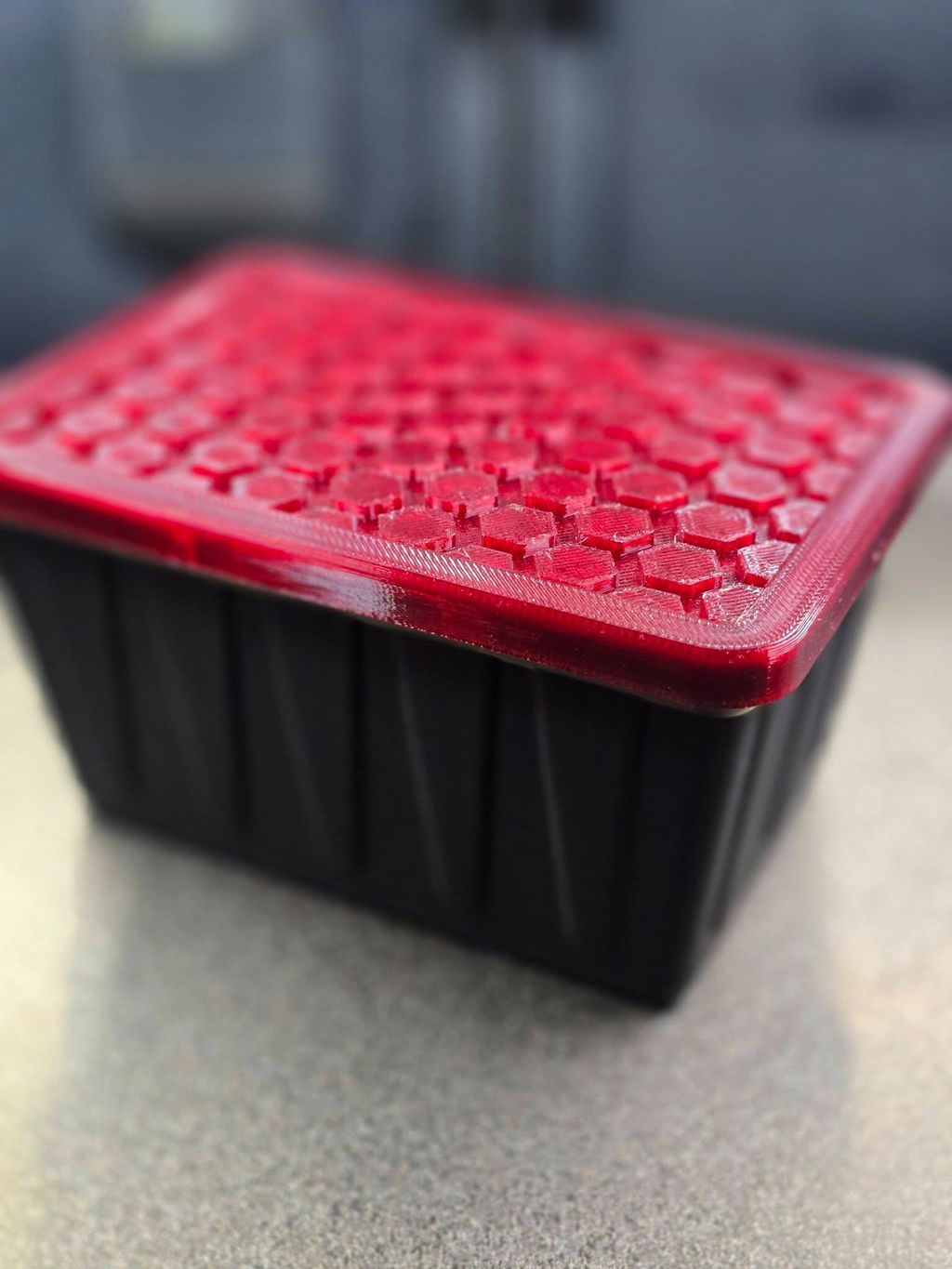
Translucent Blood Red is a deep, translucent red PLA filament that lets light through. Use it for LED covers, light-up signs, taillights on scale models, and props that should glow red when lit from behind.

Translucent Blood Red is see-through in thin walls, but not fully transparent like glass: thin walls glow when backlit, while thick walls and dense infill look darker and let less light through. Want an opaque red instead? See Scarlet Red or Maroon Red.

Like all Coex Standard PLA, it's made in our Green Bay, Wisconsin facility from virgin NatureWorks Ingeo 4043D resin — colorant only, no fillers — and held to ±0.03mm diameter on every spool. Our Standard PLA holds its own against most brands' PLA+.

Need stronger parts? Translucent Blood Red also comes in PLA Prime, which prints much like Standard PLA but is significantly stronger once annealed (heat-treated after printing).

Specs

  • Material: Standard PLA, NatureWorks Ingeo 4043D
  • Diameter: 1.75mm or 2.85mm, ±0.03mm
  • 1.75mm spools: 500g · 1kg · 5lb
  • 2.85mm spools: 1kg · 5lb
  • Vacuum-sealed with desiccant
  • Backed by our 100% satisfaction guarantee
  • Made in Green Bay, Wisconsin, USA
  • Slicer profile: the COEX PLA profile for 1.75mm filament is built into OrcaSlicer 2.3.2 and later. In Filament Selection, choose vendor COEX 3D, then COEX PLA.

Print settings · Slicer profiles · Technical data sheet · Safety data sheet

COEX PLA print settings

Print COEX PLA with a 220–240°C nozzle and a 0–60°C bed, with the part-cooling fan up to 100% (off for the first layer), and dry it at 55°C for 3–6 hours.

These are COEX 3D's recommended starting settings, made to match the COEX 3D filament settings tables for every filament we make in Green Bay, Wisconsin. Treat each value as a starting point and adjust it for your printer.

1. Material notes

  • Keep filament dry: store it sealed, and dry it again only after the spool has been exposed to air
  • PLA is less hygroscopic than other materials, but proper storage helps maintain quality
  • Dry an opened spool at 55°C for 3–6 hours
  • Check for any visible damage before use

2. Temperature settings

Nozzle temperature: 220–240°C

Bed temperature: 0–60°C

  • Wash the bed often for good adhesion: use dish soap and rinse thoroughly to remove oils
  • Bed adhesion: often none is needed on PEI; otherwise use a glue stick, painter's tape or WELD3D
  • Use a brim for tall or large prints
  • Keep the ambient temperature stable

3. Basic parameters

PLA (polylactic acid) is a biodegradable polymer known for its ease of printing, good surface quality and dimensional accuracy. It suits decorative parts, prototypes and general printing where mechanical properties are not critical.

COEX PLA basic parameters by nozzle size
Nozzle Layer height Line width Max volumetric speed Nozzle temperature
0.4mm 0.2mm 0.42mm 12.0 mm³/s 220°C
0.6mm 0.3mm 0.62mm 27.0 mm³/s 225°C
0.8mm 0.4mm 0.82mm 48.0 mm³/s 230°C
1.0mm 0.5mm 1.02mm 75.0 mm³/s 235°C

4. Speed settings

0.4mm nozzle (max volumetric speed 12.0 mm³/s)

COEX PLA speeds for a 0.4mm nozzle
Line type Percentage Speed
External perimeter 50% 71.43 mm/s
Internal perimeters 75% 107.14 mm/s
Infill 100% 142.86 mm/s
Top/bottom 60% 85.71 mm/s
First layer 30% 42.86 mm/s

0.6mm nozzle (max volumetric speed 27.0 mm³/s)

COEX PLA speeds for a 0.6mm nozzle
Line type Percentage Speed
External perimeter 50% 72.58 mm/s
Internal perimeters 75% 108.87 mm/s
Infill 100% 145.16 mm/s
Top/bottom 60% 87.10 mm/s
First layer 30% 43.55 mm/s

0.8mm nozzle (max volumetric speed 48.0 mm³/s)

COEX PLA speeds for a 0.8mm nozzle
Line type Percentage Speed
External perimeter 50% 73.17 mm/s
Internal perimeters 75% 109.76 mm/s
Infill 100% 146.34 mm/s
Top/bottom 60% 87.80 mm/s
First layer 30% 43.90 mm/s

1.0mm nozzle (max volumetric speed 75.0 mm³/s)

COEX PLA speeds for a 1.0mm nozzle
Line type Percentage Speed
External perimeter 50% 73.53 mm/s
Internal perimeters 75% 110.29 mm/s
Infill 100% 147.06 mm/s
Top/bottom 60% 88.24 mm/s
First layer 30% 44.12 mm/s

5. Retraction settings

COEX PLA retraction by nozzle size
Nozzle Distance Speed Z-hop
0.4mm 0.5–0.8mm 45mm/s 0.2mm
0.6mm 0.6–1.0mm 45mm/s 0.2mm
0.8mm 0.8–1.2mm 40mm/s 0.2mm
1.0mm 1.0–1.5mm 35mm/s 0.2mm

6. Cooling settings

Cooling configuration:

  • First layer: 0% (fan off)
  • General printing: 100% base fan speed
  • Bridges and overhangs: 100% fan speed
  • Layers under 15 seconds: 100% fan speed

Critical considerations:

  • PLA needs maximum cooling for best results
  • Full fan speed helps with bridging and overhangs
  • The first layer needs no cooling for good adhesion
  • Small parts need maximum cooling

7. Troubleshooting

COEX PLA troubleshooting
Problem Solution
Poor layer adhesion
  1. Increase the nozzle temperature by 5–10°C
  2. Reduce cooling fan speed for the first few layers
  3. Clean the build surface with IPA
Warping
  1. Increase the bed temperature to 60°C
  2. Add a brim (5–10mm)
  3. Make sure there are no drafts in the printing area
Stringing
  1. Lower the temperature by 5°C
  2. Increase retraction speed to 45mm/s
  3. Adjust retraction distance
Under-extrusion
  1. Increase the temperature by 5–10°C
  2. Clean the nozzle or try a cold pull
  3. Check filament quality
Poor overhangs
  1. Make sure cooling is at 100%
  2. Reduce the temperature by 5°C
  3. Reduce print speed by 50%

Please note: These printing parameters are initial recommendations based on our experience. They may need adjustment for your specific 3D printer, environmental conditions and the geometry of the part you are printing. Use them as a starting point and fine-tune them for your needs.
Coex 3D Filament Slicer Profiles

CX02 PLA Technical Data Sheet

Technical Data Sheet: CX02 PLA SERIES 3D PRINTING FILAMENT

TDS Rev 2.0

BASE RESIN: NatureWorks Ingeo Biopolymer

Physical Properties

PropertyStandardUnitTypical Value
Specific Gravity - DensityASTM D792g/cc1.24
Melt Flow Rate @210°C/2.16 kgASTM D1238g/10 min6
Rel. Vis. @ 1.0 g/dL in CHCl₃ @30°CASTM D5225g/dL4.0

Mechanical Properties

PropertyStandardUnitTypical Value
Tensile Yield StrengthASTM D638MPa60
Tensile ModulusASTM D638MPa3.6
Tensile ElongationASTM D638%6
Tensile StrengthASTM D638MPa53
Notched Izod ImpactASTM D256J/m16
Shrinkage Rate < 0.5%ASTM D955mm/mm.0002

Thermal Properties

PropertyStandardUnitTypical Value
Glass Transition Temperature (Tg)ASTM D3418°C55 - 60
Heat Distortion Temp @ 0.45MPaASTM E2092°C55
Decomposition TemperatureASTM D3418°C250

SPECIFICATIONS

Filament Size:1.75mm(in)2.85mm(in)
MIN Diameter:1.72mm0.0677 in2.79mm0.1098 in
MAX Diameter:1.78mm0.0701 in2.91mm0.1146 in
Tolerance+/- .03mm+/- 0.0012 in+/- .06mm+/- 0.0024 in

CERTIFICATIONS

Filament Complies with 2008 Consumer Product Safety Improvement Act (CPSIA) 2008

Filament Complies with CONEG Regulations

Filament Complies with RoHS Directive 2002/95/EC

FCN 000178 for the resin became effective on 1/3/2002 and is a permitted component of food packaging materials pursuant to set. 201(s) of the Federal Food, Drug, and Cosmetic Act, and parts 182, 184, and 186 of the Food Additive Regulations.

Printed Specimen Conditions

Printer:Open Source FDM/FFF
Nozzle:0.4mm
Layer Height:0.25mm
Infill:100%, +/-45°
Extrusion Temp:225°C
Bed Temp:None Needed (or 50 – 70°C if applicable)
Specimen Orientation:XY Flat
Annealed at 110°C/15 min.

Disclaimer: The technical data contained on this data sheet is furnished without charge or obligation and accepted at the recipient's sole risk. This data should not be used to establish specifications limits or used alone as the basis of design. The data provided is not intended to substitute any testing that may be required to determine fitness for any specific use.

Download TDS (PDF)

CX02 PLA Safety Data Sheet

Safety Data Sheet: CX02 PLA SERIES 3D PRINTING FILAMENT

SDS Rev 1.0

BASE RESIN: NatureWorks™ Ingeo 4043D

1. Identification of the substance/preparation and of the company

1.1 Trade name:Coex PLA 3D printer filament
1.2 Use of the product:3D printer filament, thermoplastic.
1.3 Supplier:Coex
660 Corporate WAY
Pulaski, WI 54162
Phone: (920) 757-1055

2. Hazards identification

2.1 Classification:This product is NOT classified according to 29 CFR 1910.1200 Hazard Communication Standard 2012
2.2 Special advice on hazards:If small particles are generated during further processing, handling, or by other means, combustible dust concentrations in air may form.

3. Composition / information on ingredients

3.1 Chemical characteristics:

CAS #Hazardous ComponentsConcentration
9051-89-2Polylactide resin>=98%

4. First-aid measures

4.1 On skin contact:In case of contact with molten polymer immediately cool the skin with cold water. Medical aid may be required to remove adhering material and for treatment of burns.
4.2 After inhalation:Remove from exposure and move to fresh air immediately. If not breathing, give artificial respiration. If breathing is difficult, give oxygen. Get medical aid.
4.3 On ingestion:If swallowed, wash out mouth with water provided person is conscious. Do NOT induce vomiting.
4.4 On eyes contact:In case of contact, immediately flush eyes with copious amounts of water for at least (15) minutes.

5. Fire-fighting measures

5.1 Suitable fire extinguishing media:Water spray, chemical powder or carbon dioxide.
5.2 Special exposure hazards:During a fire, smoke may contain the original material in addition to combustion products of varying composition which may be toxic and/or irritating. Combustion products may include and are not limited to: Carbon dioxide. Carbon monoxide.
5.3 Special protective equipment:Self-contained breathing apparatus
5.4 Remark:Cool containers / tanks with water spray. Water mist may be used to cool closed containers. Fine dust dispersed in air may ignite. Risks of ignition followed by flame propagation or secondary explosions shall be prevented by avoiding accumulation of dust, e.g. on floors and ledges.

6. Accidental release measures

6.1 Personal precautions:Spilled material may cause a slipping Hazard.
6.2 Methods for cleaning up:Vacuum or sweep up material and place into a suitable disposal container.

7. Handling and storage

7.1 Handling:Avoid contact with molten polymer. Avoid generation of dust and electrostatic charge.
7.2 Storage:Protect against moisture. Store cool and keep packaging closed when not in use. Avoid sources of ignition.

8. Exposure controls/ personal protection

8.1 Technical safety measures:Use with adequate ventilation. Minimize dust generation and accumulation as combustible dust mixtures may be formed.
8.2 Personal safety equipment:Use adequate safety equipment, e.g. protective clothing, eye protection glasses, heat protection gloves. In case of dust formation wear mask with particle filter.
8.3 Work hygiene:No eating or drinking during working. Avoid contact of hot material with the skin. Avoid breathing dust and vapors.

9. Physical and chemical properties

9.1 Form:Spool
9.2 Color:Various
9.3 Odor:Sweet
9.4 Melting Temperature:150-180C
9.5 Oxidizing properties:Not self-igniting / flammable
9.6 Explosions limits:No test data
9.7 Density:1.25 g/cm³
9.8 Solubility in water:Insoluble

10. Stability and reactivity

10.1 Stability:The product is stable at recommended storage conditions.
10.2 Conditions to be avoided:Stable under recommended conditions of storage and handling.
10.3 Substances to be avoided:No special recommendations.
10.4 Hazardous decomposition products:Decomposition products depend upon temperature, air supply and the presence of other materials. Processing may release fumes and other decomposition products. At temperatures exceeding melt temperatures, polymer fragments can be released. Fumes can be irritating. Decomposition products can include and are not limited to: Combustible gases.

11. Toxicological information

11.1 Local irritation:Eye, Skin, Inhalation, Ingestion.
11.2 Other remarks:Product dust may be irritating to eyes, skin and respiratory system. Resin particles, like other inert materials, are mechanically irritating to eyes. Ingestion may cause gastrointestinal irritation, nausea, vomiting and diarrhea.

12. Ecological information

12.1 Ecological info:EC50/72h/algae > 1100 mg/L
12.2 Biological degradation:Inherently biodegradable under industrial composting conditions.
12.3 Bioaccumulation:Not expected to bioconcentrate or bioaccumulate. Data for Component: White mineral oil (petroleum)(8042-47-5) Bioconcentration potential is high (BCF > 3000 or Log Pow between 5 and 7). Bioconcentration Factor (BCF): 1,900; Fish; Estimated.

13. Disposal considerations

13.1 Product:In accordance with local and national regulations. Should not be released into the environment. Do not contaminate ponds, waterways or ditches with chemical or used container.
13.2 Uncleaned packaging:Packaging material has to be emptied completely and disposed in accordance with the regulations. Packaging can be recycled if not contaminated.

14. Transport information

14.1 Transport regulations:Not classified as hazardous under transport regulations DOT, ICAO/IATA, IMDG/GGVSee, ICAO/IATA

15. Regulatory information

15.1 EPA regulations:Sara 313 title III: Not Listed
TSCA Inventory List: Listed

16. Other information

This data is based on the current state of our information and experience. This safety data sheet describes our product in terms of safety requirements. Preceding data is not applicable as a warranty of product properties. It is the responsibility of the recipient to observe the existing legal regulations for the use of this product.

Disclaimer: The safety data contained on this data sheet is furnished without charge or obligation and accepted at the recipient's sole risk. This data describes our product in terms of safety requirements. The data provided is not applicable as a warranty of product properties. It is the responsibility of the recipient to observe the existing legal regulations for the use of this product.

Download SDS (PDF)

Translucent Blood Red PLA

Save $3.00
SKU: CX02-1600-18-1KG
25 reviews

Diameter: 1.75mm
Weight: 1kg
Price:
Sale price$21.00 Regular price$24.00
Stock:
Stock: 45

You may also like

Recently viewed