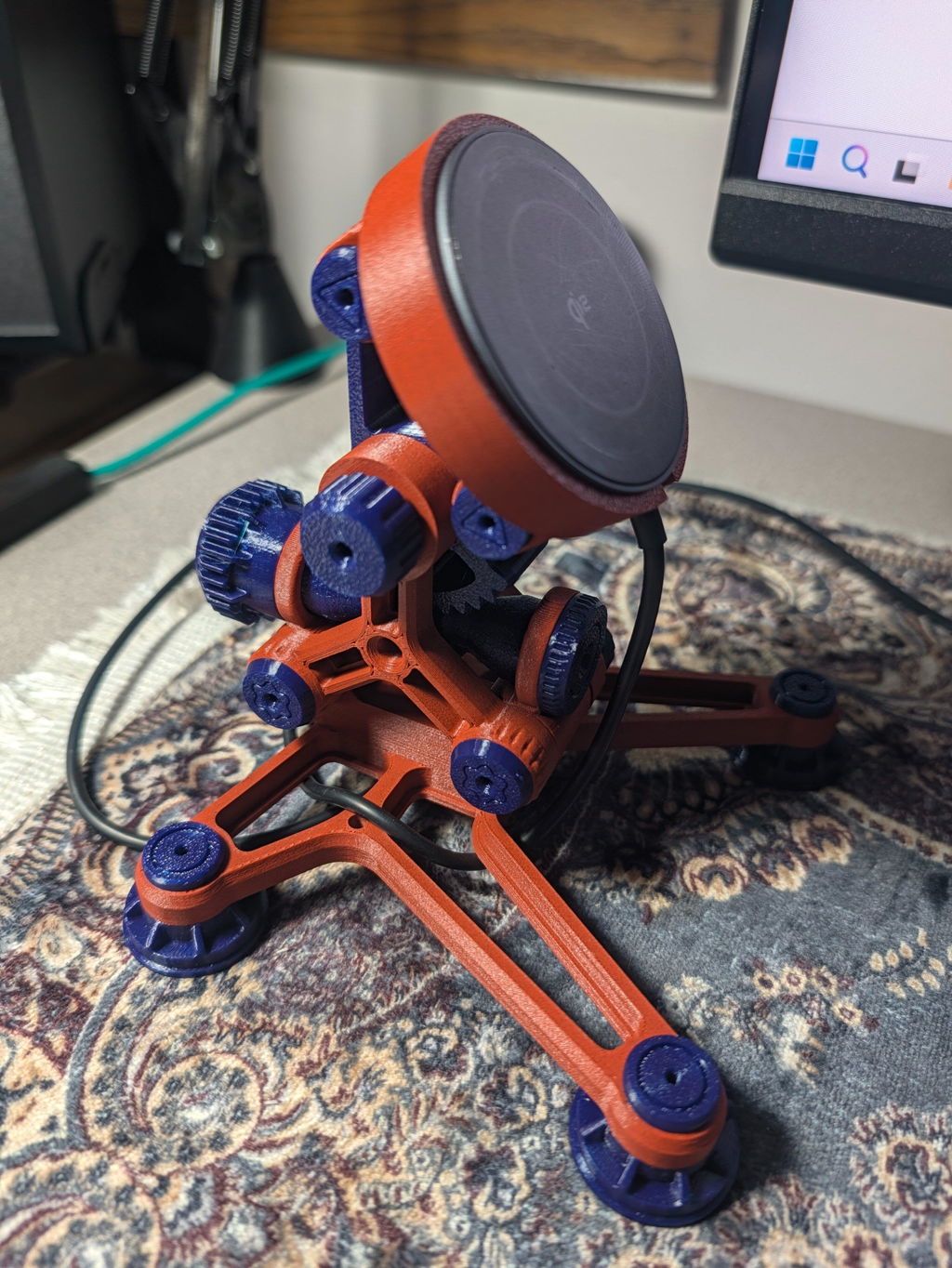
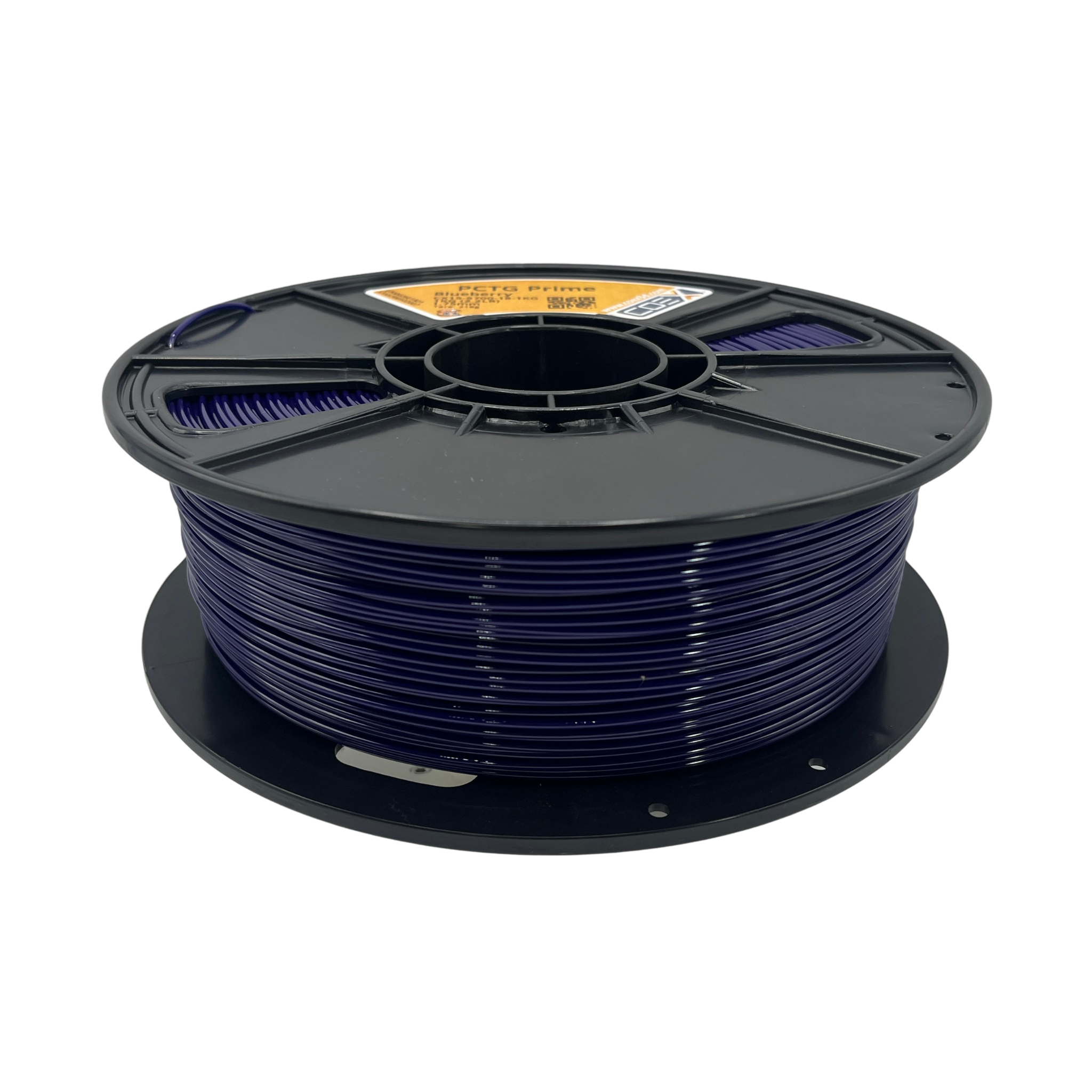
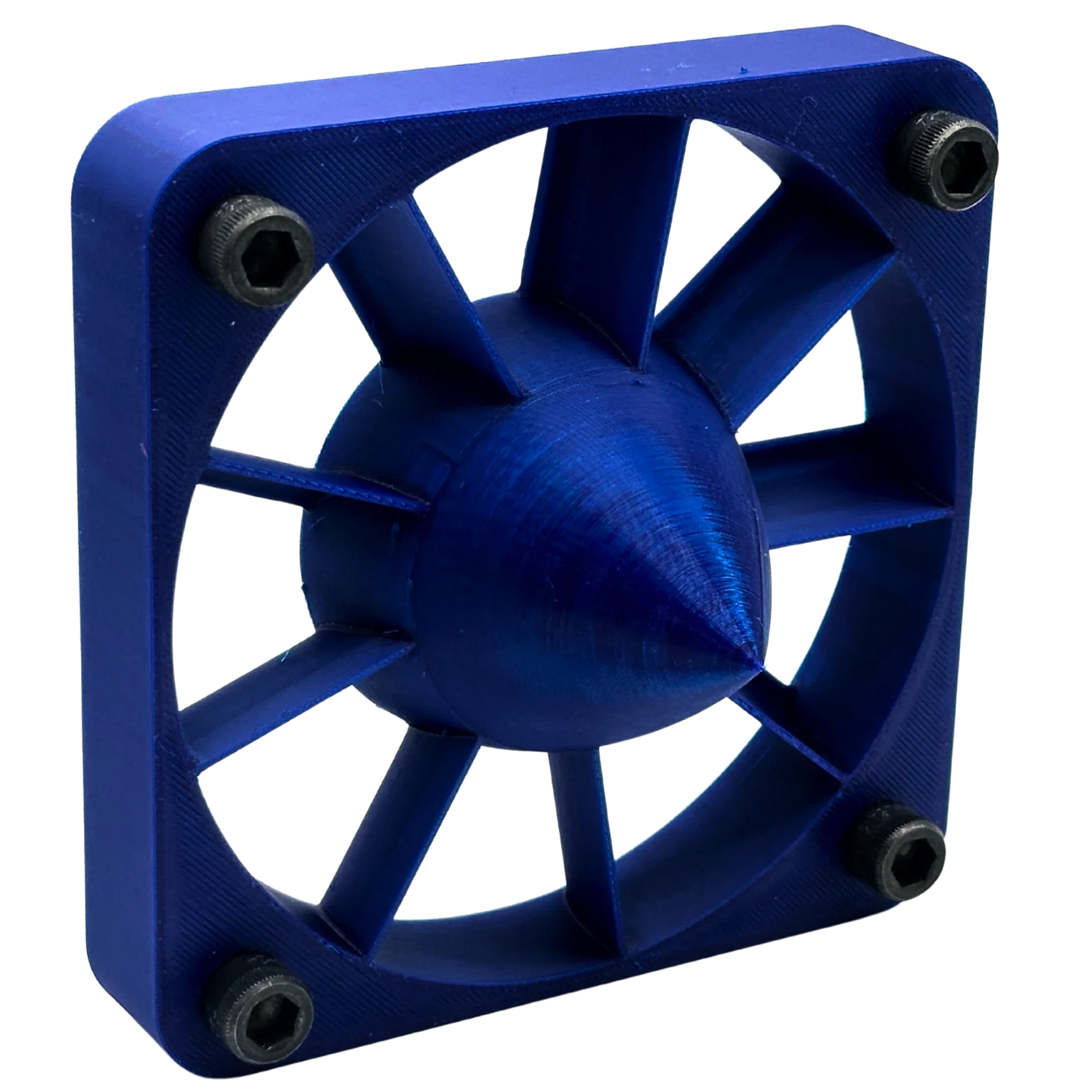


Blueberry PCTG Prime is a glycol-modified copolyester made from virgin resin, and it does not contain polycarbonate. It's easy to print and an upgrade from PETG for parts that need more strength, heat resistance or chemical resistance: functional prototypes, mechanical parts and jigs, automotive components, protective casings and covers, and containers and organizers.
Key properties
- Significantly higher impact strength than PETG, and ductile enough to bend under stress without fracturing
- Resists oils, greases and solvents
- Heat deflection temperature up to 76°C (169°F), higher than standard PETG
- More UV-resistant than PETG
- Smooth finish
Printing notes
- Low shrinkage and warping, with good dimensional stability
- No heated chamber required
Specs
- Base resin: virgin PCTG copolyester
- Tolerance: ±0.03 mm (1.75 mm) · ±0.06 mm (2.85 mm)
- Other spool sizes available by request: contact us.
- Extruded, quality controlled and shipped from one plant in Green Bay, WI.
CX15 PCTG Prime Technical Data Sheet
PCTG Prime 3D Printer Filament
PCTG copolyester · Product code CX15 · 1.75 mm
Base resin: PCTG copolyester
Typical values for the base resin. Printed parts vary with print settings, orientation and moisture content. Test standards as printed by the resin maker.
Physical properties
| Property | Standard | Unit | Typical value |
|---|---|---|---|
| Specific density | ASTM D-792 | g/cm³ | 1.27 |
| Mold shrinkage | ASTM D 955 | % | 0.2–0.5 |
| Water absorption | ASTM D 570 | % | 0.15 |
| Humidity absorption | ISO 62/method 4 | % | 0.17 |
Mechanical properties
| Property | Standard | Unit | Typical value |
|---|---|---|---|
| Hardness (Shore D) | ASTM D2240 | 76 | |
| Tensile stress at yield | ISO 527-1/-2 | MPa (psi) | 50 (7,250) |
| Tensile strain at yield | ISO 527-1/-2 | % | 4.2 |
| Tensile strain at break | ISO 527-1/-2 | % | 84 |
| Tensile modulus | ISO 527-1/-2 | MPa (psi) | 2,175 (315,000) |
| Flexural modulus | ISO 178 | MPa (psi) | 1,822 (264,000) |
| Flexural strength | ISO 178 | MPa (psi) | 61 (8,850) |
| Izod impact resistance, notched, 23 °C | ISO 178/A (as printed by the maker) | kJ/m² | 5.2 |
| Izod impact resistance, notched, 0 °C | ISO 178/A (as printed by the maker) | kJ/m² | 5.2 |
| Izod impact resistance, notched, -30 °C | ISO 178/A (as printed by the maker) | kJ/m² | 5.2 |
| Izod impact resistance, unnotched, 23 °C | ISO 180/U | kJ/m² | Not break |
| Izod impact resistance, unnotched, 0 °C | ISO 180/U | kJ/m² | Not break |
| Izod impact resistance, unnotched, -30 °C | ISO 180/U | kJ/m² | Not break |
| Puncture impact behaviour, energy to maximum force | ISO 6603-2/3,3 m/s | J | 43 |
Thermal properties
| Property | Standard | Unit | Typical value |
|---|---|---|---|
| Glass transition temperature | ASTM D3418 | °C (°F) | 80–85 (176–185) |
| Vicat softening temperature | ISO 306/A50 | °C (°F) | 79 (174) |
| Heat deflection temperature, 0.45 MPa | ISO 75-1/-2 | °C (°F) | 71 (160) |
| Heat deflection temperature, 1.80 MPa | ISO 75-1/-2 | °C (°F) | 61 (142) |
Optical properties
| Property | Standard | Unit | Typical value |
|---|---|---|---|
| Gloss | ASTM D 2457/60° | GU | 166 |
Filament specifications
| Diameter | Nominal | Minimum | Maximum | Tolerance |
|---|---|---|---|---|
| 1.75 mm | 1.75 mm (0.0689 in) | 1.72 mm (0.0677 in) | 1.78 mm (0.0701 in) | ±0.03 mm (±0.0012 in) |
Recommended print settings
| Nozzle temperature | 250–280°C |
| Bed temperature | 75–90°C |
| Part cooling fan | 20–50% |
| Enclosure | Recommended |
| Drying | 65°C for 4–6 hours |
www.coex3d.com · COEX LLC, 1228 Elizabeth St, Green Bay, WI 54302, USA · (920) 757-1055
Disclaimer: The technical data contained on this data sheet is furnished without charge or obligation and accepted at the recipient's sole risk. This data should not be used to establish specification limits or used alone as the basis of design. The data provided is not intended to substitute any testing that may be required to determine fitness for any specific use.
CX15 PCTG Prime Safety Data Sheet
PCTG Prime 3D Printer Filament
PCTG copolyester · Product code CX15
1. Identification
| Product identifier | PCTG Prime 3D Printer Filament |
| Product code | CX15 |
| Recommended use | 3D printing (FFF/FDM) filament, thermoplastic |
| Restrictions on use | Not specified |
| Supplier | COEX LLC, 1228 Elizabeth St, Green Bay, WI 54302, USA |
| Telephone | (920) 757-1055 |
| Emergency telephone | (920) 757-1055 (business hours) |
| Website | www.coex3d.com |
2. Hazard identification
| Classification | The substance is not classified as dangerous according to Regulation (EC) No 1272/2008 (CLP/GHS) and Directive 67/548/EEC. |
| Label elements | Hazard Pictogram: None. Signal Word: None. Hazard Statements: None. Precautionary Statements: Not applicable. |
| Hazards not otherwise classified | The hazards of this product are associated mainly with its processing. Molten polymer will produce thermal burns. Polymer dust may represent a fire hazard at sufficient concentrations in presence of ignition sources. |
| Other information | The hazards of this product are associated mainly with its processing. Molten polymer will produce thermal burns. Polymer dust may represent a fire hazard at sufficient concentrations in presence of ignition sources. |
3. Composition / information on ingredients
| Chemical name | CAS No. | Weight % |
|---|---|---|
| Copolyester | no CAS number given | > 99.9 |
| Additives | no CAS number given | < 0.1 |
The polymer contains minor additives such as stabilizers and catalysts. These additives are immobilized by the polymer and are not released with normal use. (The old COEX CX15 SDS also gave Copolyester > 99.9 %, Additives < .1 %.)
4. First-aid measures
| Inhalation | Move exposed person to fresh air in case of accidental inhalation of dust or fumes from overheating or combustion. Consult a physician after significant exposure. |
| Eye contact | Immediately flush eyes with plenty of water for at least 20 minutes. Get medical attention if symptoms occur. |
| Skin contact | Cool skin rapidly with cold water after contact with molten polymer. Do not peel polymer from the skin. Obtain medical attention. |
| Ingestion | Do not induce vomiting unless directed by medical personnel. Never give anything by mouth to an unconscious person. Get medical attention if symptoms occur and show the TDS. |
| Most important symptoms | Symptoms related to the physical, chemical and toxicological characteristics: Inhalation: No specific data. Ingestion: No specific data. Skin contact: No specific data. Eye contact: No specific data. |
| Note to physicians | Treat symptomatically. Contact poison treatment specialist immediately if large quantities have been ingested or inhaled. Specific treatments: No specific treatment. |
5. Fire-fighting measures
| Suitable extinguishing media | Suitable: Use an extinguishing agent suitable to local circumstances and the surrounding environment. Example: Water Spray, Dry Chemical Powder and Carbon Dioxide. Unsuitable: Do not use water, if fire is caused by an electrical short circuit. |
| Special hazards | Hazardous combustion products: Carbon monoxide, carbon dioxide, acetaldehyde. Unusual fire and explosion hazards: Powdered material may form explosive dust-air mixtures. High voltage static electricity build-up and discharge must be avoided when significant quantities of powdered material are present. |
| Protective equipment | Wear self-contained breathing apparatus, protective clothing and headgear to prevent contact with skin and eyes. |
| Further information | Dispose of fire debris and contaminated extinguishing water in accordance with official regulations. |
6. Accidental release measures
| Personal precautions | Spilled filament or pieces may cause a slipping hazard. Ensure adequate ventilation. |
| Environmental precautions | Do not flush into surface water or sanitary sewer system. Keep out of waterways. |
| Cleaning up | Pick up or sweep up and place in a suitable container for disposal. |
7. Handling and storage
| Safe handling | Put on appropriate personal protective equipment (see Section 8). Adequate ventilation and cleanliness must be employed in the processing area. Area should be controlled using good occupational hygiene practices. Accumulation of the dust may represent a fire and explosion hazard at sufficient concentrations. Remove ignition sources. Beware of electrostatic charges. |
| Fire and explosion | Dust from grinding or sanding can form an explosive mixture with air. Take precautionary measures against static discharges. |
| Storage | Keep containers closed when not in use. Store in original container in a dry, cool and well-ventilated area, away from flame, ignition sources, direct sunlight or incompatible materials (see section 10). Maintain good housekeeping to control dust accumulations. |
| Incompatibilities | Acetic Anhydride, acetone, aniline, benzene, chloroform, chromic acid, cyclohexanone, dimethylformamide, dioxane, ethyl acetate, phenol, tetrahydrofuran. Reactive with strong oxidizing agents, as well as strong acids and caustic will decompose polyester. |
8. Exposure controls / personal protection
| Exposure limits | No exposure limit value known. |
| Engineering controls | Provide exhaust ventilation if dust or fumes are generated during processing. |
| Personal protection | Engineering controls: Good general ventilation (typically 10 air changes per hour) should be used. Provide for appropriate exhaust ventilation and dust collection at machinery. Provide exhaust ventilation at places where dust is formed. Hygiene measures: Wash hands before eating and at the end of the working period. Eye/face protection: Not required under normal conditions of uses. Safety eyewear should be used when there is a likelihood of exposure. Recommended: Safety glasses with side shields when working with molten material. Hand protection: Protective gloves are required when handling hot polymer. Other skin protection: Appropriate footwear and additional skin protection measures should be selected based on the task being perform and the risks involved and should be approved by a specialist before handling this product. A safety shower and washing facilities should be available. Respiratory protection: Not required under normal conditions of uses. In the case of respirable dust and/or fumes, use self-contained breathing apparatus. If respirators are used, a program should be instituted to assure compliance with OSHA standard (OSHA Respiratory Protection Program Guidelines). |
| Hygiene | Do not eat or drink while working. Handle in accordance with good industrial hygiene and safety practice. |
9. Physical and chemical properties
| Appearance | Solid Colourless Pellets |
| Odor | Slight |
| Odor threshold | Not applicable |
| pH | Not applicable |
| Melting temperature | No data available |
| Freezing point | No data available |
| Boiling point | Decomposes; not determined |
| Flash point | Not applicable |
| Evaporation rate | Not applicable (solid) |
| Flammability | Non-flammable |
| Explosive limits | No data available |
| Vapor pressure / vapor density | No data available |
| Density | Relative density: 1,27 g.cm3 |
| Solubility in water | Insoluble in water |
| Partition coefficient | No data available |
| Auto-ignition temperature | No data available |
| Decomposition temperature | No data available |
| Viscosity | Not applicable (solid) |
| Oxidizing properties | No data available |
10. Stability and reactivity
| Reactivity | No specific test data related to reactivity available for this product or its ingredients. |
| Chemical stability | The product is stable. |
| Hazardous reactions | Under normal conditions of storage and use, hazardous reactions will not occur. |
| Conditions to avoid | No specific data. |
| Incompatible materials | Acetic Anhydride, acetone, aniline, benzene, chloroform, chromic acid, cyclohexanone, dimethylformamide, dioxane, ethyl acetate, phenol, tetrahydrofuran. Reactive with strong oxidizing agents, as well as strong acids and caustic will decompose polyester. |
| Hazardous decomposition products | Carbon monoxide, carbon dioxide, acetaldehyde. |
11. Toxicological information
| Routes of exposure | Inhalation, ingestion, eye or skin contact. |
| Acute toxicity | Routes of exposure: Inhalation: Combustion products may be irritant; high concentration of dust may be irritant to the respiratory tract. Ingestion: Expected to be a low ingestion hazard. Skin contact: May cause physical abrasion in contact with skin. Molten polymer will adhere to the skin causing deep thermal burns. Eye contact: May cause physical abrasion in contact with eyes. Potential acute health effects (inhalation, ingestion, skin contact, eye contact): No known significant effects or critical hazards. |
| Inhalation | Not inhalable in the form supplied. |
| Irritation | Inhalation: Combustion products may be irritant; high concentration of dust may be irritant to the respiratory tract. Skin contact: May cause physical abrasion in contact with skin. Eye contact: May cause physical abrasion in contact with eyes. |
| Sensitization, repeated dose, mutagenicity, carcinogenicity, reproductive toxicity | Short term exposure, potential immediate effects: Not available. Potential delayed effects: Not available. Long term exposure, potential immediate effects: Not available. Potential delayed effects: Not available. General: No known significant effects or critical hazards. Carcinogenicity: No known significant effects or critical hazards. Mutagenicity: No known significant effects or critical hazards. Teratogenicity: No known significant effects or critical hazards. Fertility effects: No known significant effects or critical hazards. |
| Aspiration hazard | None expected. |
12. Ecological information
| Aquatic toxicity | Toxicity: Not available. Mobility: Not available (soil/water partition coefficient KOC: Insoluble in water). PBT: Not available. vPvB: Not available. Other adverse effects: No known significant effects or critical hazards. |
| Persistence and degradability | Not available. |
| Bioaccumulation | Not available. |
13. Disposal considerations
| Product | Dispose of in accordance with local, state and federal regulations. Check for recycling options. Do not release into the environment. |
| Packaging | Empty spools and packaging can be recycled if not contaminated. |
14. Transport information
| US DOT, IMDG, IATA/ICAO | The substance is not subject to transport regulations on hazardous goods included in ADR (road transport), RID (rail transport), IMDG (marine transport) and ICAO/IATA (air transport). UN number: Not applicable. UN proper shipping name: Not applicable. Transport hazard classes: None. Packing group: Not applicable. Environmental hazards: Not applicable. |
15. Regulatory information
| U.S. TSCA | No data available |
| SARA 313 | No data available |
16. Other information
| NFPA hazard codes | No data available |
| HMIS III rating | No data available |
| Issue date / revision | 10-27-2026 · Revision 2.0, supersedes Revision 1.0 (08-13-25). Rewritten in the 16-section OSHA format. |
| Prepared by | COEX LLC |
This data is based on the current state of our information and experience.
www.coex3d.com
Disclaimer: The safety data contained on this data sheet is furnished without charge or obligation and accepted at the recipient's sole risk. This data describes our product in terms of safety requirements. The data provided is not applicable as a warranty of product properties. It is the responsibility of the recipient to observe the existing legal regulations for the use of this product.
| Spools | Discount |
|---|---|
| 6+ | 5% off |
| 12+ | 10% off |
| 24+ | 15% off |