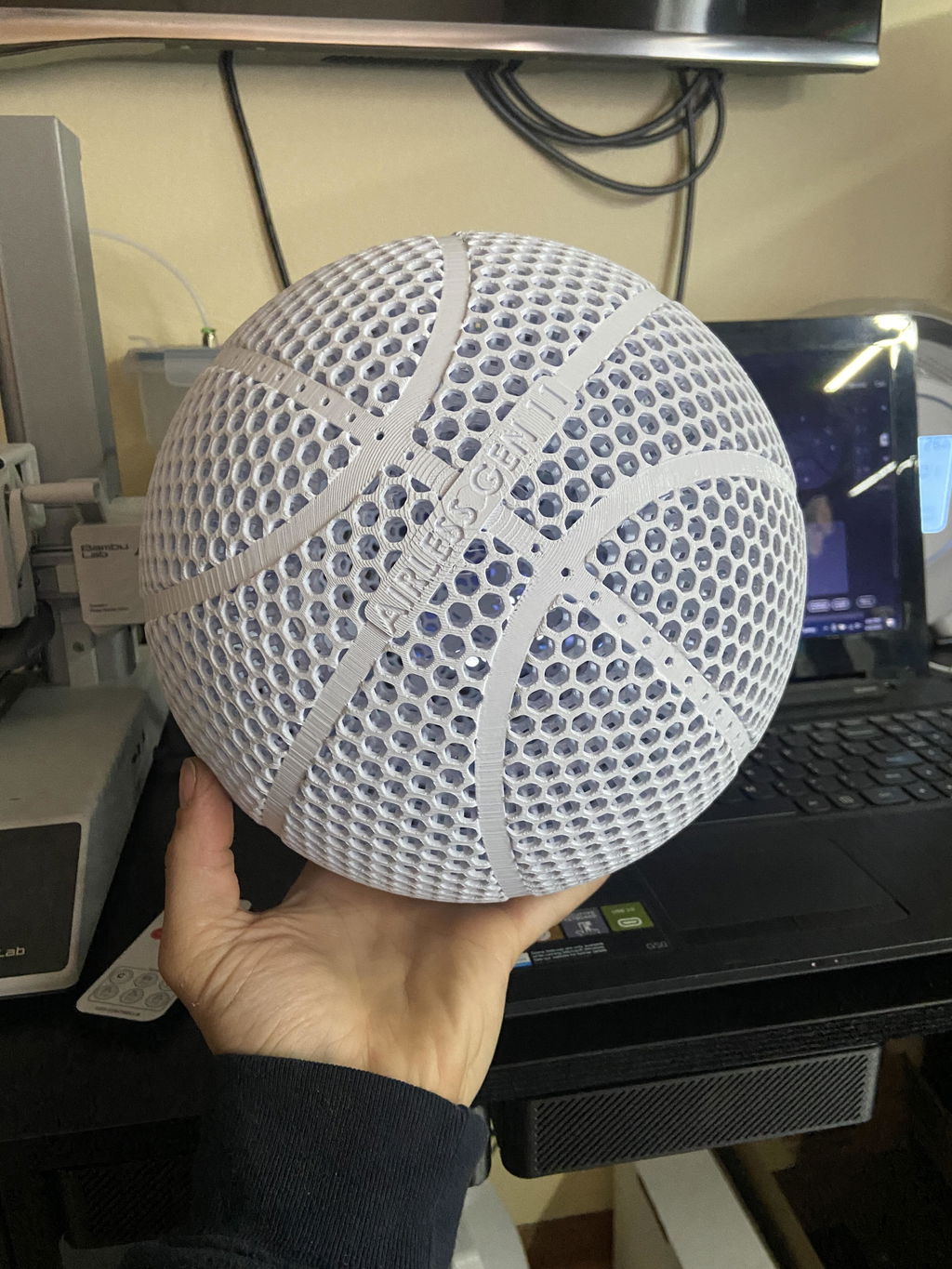
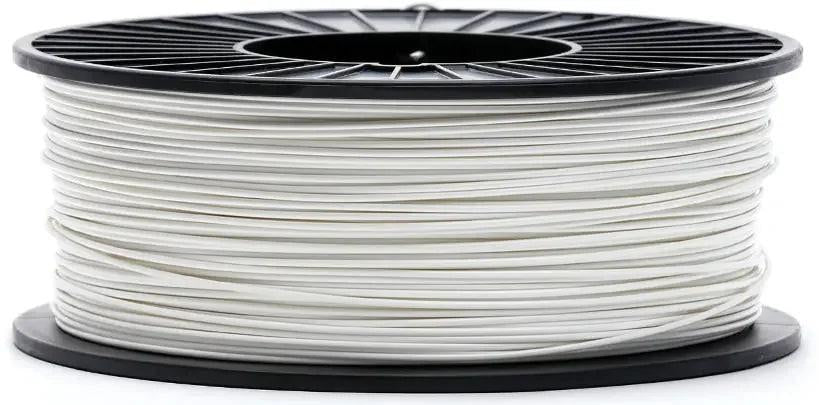
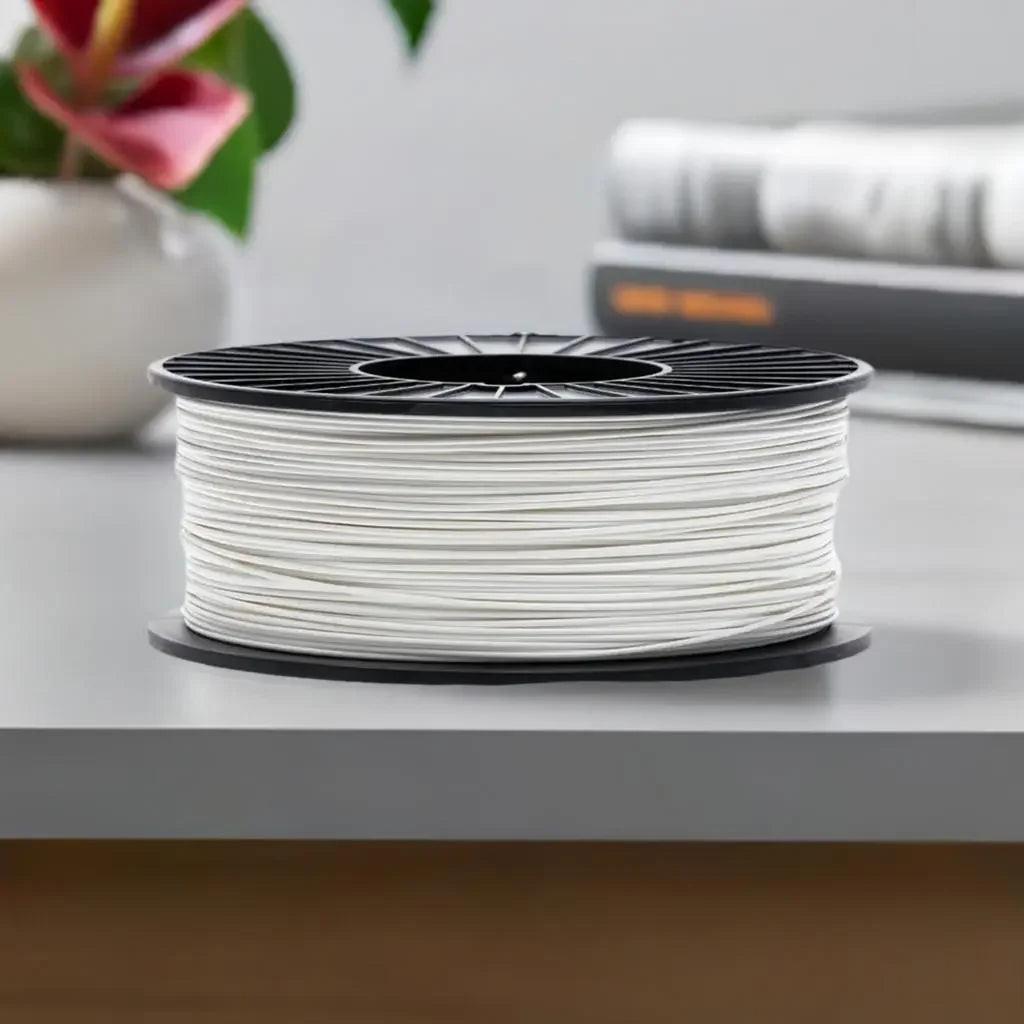
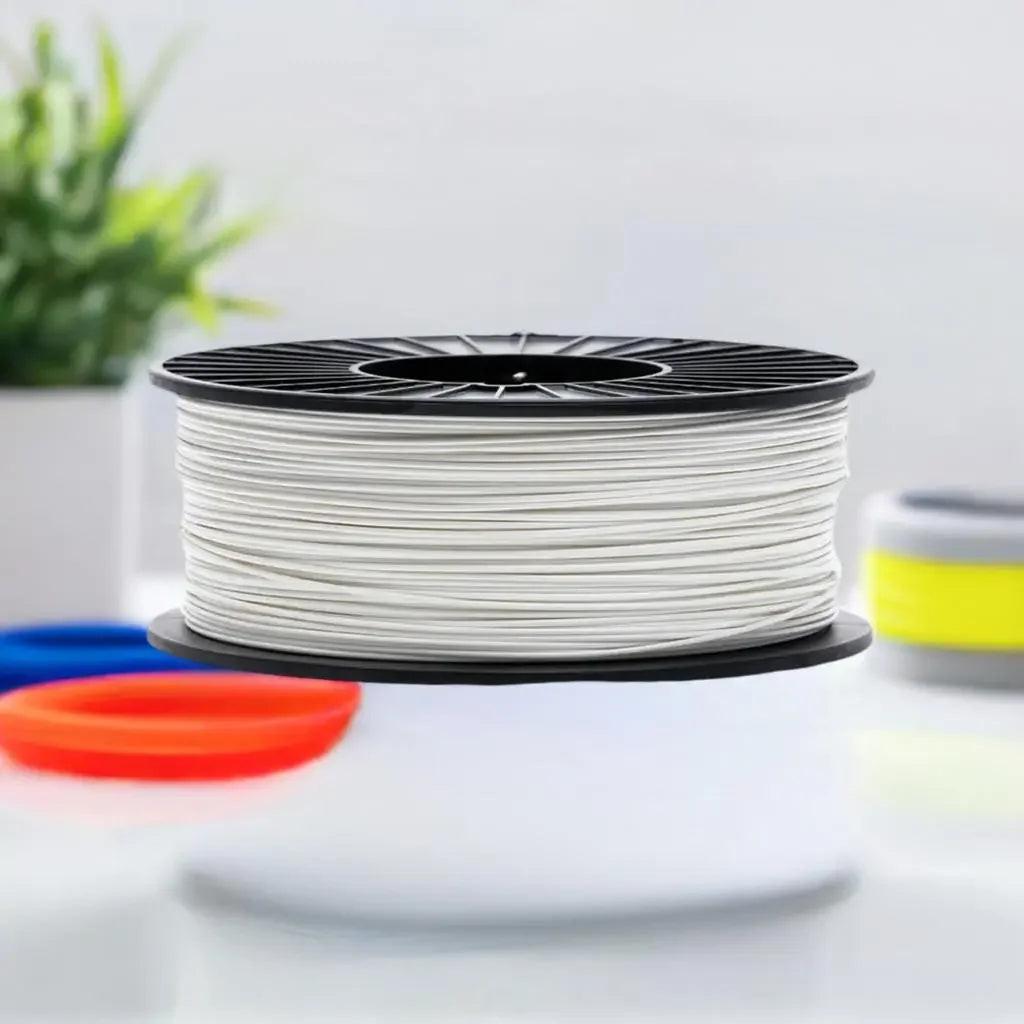


COEXFlex 60D is a thermoplastic copolyester elastomer (TPC). It flexes like TPU, but prints faster and has more strength, heat resistance and chemical resistance. 60D is the firmest grade in the COEXFlex line. Use it for parts that need to flex and bend repeatedly: grips, protective cases, seals, gaskets and functional prototypes.
Key properties
- Rubber-like flex with strong layer adhesion
- More heat, chemical and abrasion resistance than typical TPU
- Prints on any TPU-capable setup
Recommended print settings
- Hotend: 205–250°C
- Bed: 25–85°C, heated bed recommended
- Part cooling fan recommended
- Build surfaces and adhesives: WELD3D Bed Adhesion Spray, painter's tape, glue stick or PEI.
Available COEXFlex hardnesses: 30D · 90A · 40D · 60D. See the full COEXFlex range.
Specs
- Material: COEXFlex TPE (TPC)
- Tolerance: ±0.03 mm (1.75 mm) · ±0.06 mm (2.85 mm)
- Other spool sizes available by request: contact us.
- Extruded, quality controlled and shipped from one plant in Green Bay, WI.
CX19 COEXFlex TPE 60D Technical Data Sheet
COEXFlex™ TPE 60D 3D Printer Filament
Thermoplastic copolyester elastomer (TPC-ET) · Product code CX19 · 1.75 mm and 2.85 mm
Base resin: Thermoplastic copolyester elastomer (TPC-ET)
Typical values for the base resin. Printed parts vary with print settings, orientation and moisture content.
Physical properties
| Property | Standard | Unit | Typical value |
|---|---|---|---|
| Density | ISO 1183 | g/cm³ | 1.25 |
| Melt volume-flow rate (MVR), 190 °C / 2.16 kg | ISO 1133 | cm³/10 min | 5.20 |
| Molding shrinkage, across flow | ISO 294-4 | % | 0.70 |
| Molding shrinkage, flow | ISO 294-4 | % | 0.30 |
| Shore hardness, Shore D | ISO 7619 | 61 | |
| Shore hardness, Shore D, 15 sec | ISO 7619 | 55 | |
| Burning rate, 1.00 mm | ISO 3795 | mm/min (in/min) | < 80 (< 3.1) |
| FMVSS flammability | FMVSS 302 | B |
Mechanical properties
| Property | Standard | Unit | Typical value |
|---|---|---|---|
| Tensile modulus | ISO 527-2 | MPa (psi) | 190 (27,600) |
| Tensile stress at break | ISO 527-2 | MPa (psi) | 32.0 (4,640) |
| Tensile stress at 10% strain | ISO 527-2 | MPa (psi) | 11.0 (1,600) |
| Tensile strain at break | ISO 527-2 | % | 290 |
| Flexural modulus | ISO 178 | MPa (psi) | 170 (24,700) |
| Tear strength, across flow | ISO 34-1 | kN/m (lbf/in) | 180 (1,000) |
| Tear strength, flow | ISO 34-1 | kN/m (lbf/in) | 170 (970) |
Thermal properties
| Property | Standard | Unit | Typical value |
|---|---|---|---|
| Brittleness temperature | ISO 974 | °C (°F) | −65.0 (−85.0) |
| Melting temperature, 10 °C/min | ISO 11357-3 | °C (°F) | 165 (329) |
Filament specifications
| Diameter | Nominal | Minimum | Maximum | Tolerance |
|---|---|---|---|---|
| 1.75 mm | 1.75 mm (0.0689 in) | 1.72 mm (0.0677 in) | 1.78 mm (0.0701 in) | ±0.03 mm (±0.0012 in) |
| 2.85 mm | 2.85 mm (0.1122 in) | 2.79 mm (0.1098 in) | 2.91 mm (0.1146 in) | ±0.06 mm (±0.0024 in) |
Recommended print settings
| Nozzle temperature | 220–240°C |
| Bed temperature | 25–85°C |
| Enclosure | No enclosure is needed |
| Part cooling fan | 0–40% |
| Extruder | Preferably use a direct drive extruder |
| Drying | Dry an opened spool at 50°C for 4–6 hours |
| Storage | Keep filament dry: store it sealed, and dry it again only after the spool has been exposed to air |
| Bed adhesion | Use a glue stick or hairspray as a release agent, or WELD3D. COEXFlex bonds very strongly to glass and smooth PEI, so a release agent protects both the print and the plate |
| Stringing | Print multiple parts one at a time (sequentially) to minimize stringing. Use maximum travel speed to minimize stringing |
Advantages
Resilient, Flexible, Heat Resistant, Chemical Resistant, Strong, Durable Combines the flexibility of rubber with the strength and processability of thermoplastics
www.coex3d.com · COEX LLC, 1228 Elizabeth St, Green Bay, WI 54302, USA · (920) 757-1055
Disclaimer: The technical data contained on this data sheet is furnished without charge or obligation and accepted at the recipient's sole risk. This data should not be used to establish specification limits or used alone as the basis of design. The data provided is not intended to substitute any testing that may be required to determine fitness for any specific use.
CX19 CoexFlex TPE 60D Safety Data Sheet
COEXFlex™ TPE 60D 3D Printer Filament
Thermoplastic copolyester elastomer (TPC-ET) · Product code CX19
1. Identification
| Product identifier | COEXFlex™ TPE 60D 3D Printer Filament |
| Product code | CX19 |
| Recommended use | 3D printing (FFF/FDM) filament, thermoplastic |
| Restrictions on use | Not specified |
| Supplier | COEX LLC, 1228 Elizabeth St, Green Bay, WI 54302, USA |
| Telephone | (920) 757-1055 |
| Emergency telephone | (920) 757-1055 (business hours) |
| Website | www.coex3d.com |
2. Hazard identification
| Classification | Product hazard category: Combustible dust |
| Label elements | Label content. Pictogram: not required. Signal word: Warning. Hazardous warnings: If small particles are generated during further processing, handling or by other means, may form combustible dust concentrations in air. Hazardous prevention measures: not required |
| Hazards not otherwise classified | Other hazards: No applicable data available. |
| Other information | No applicable data available. |
3. Composition / information on ingredients
| Chemical name | CAS No. | Weight % |
|---|
This product does not contain any components that require disclosure according to OSHA Hazard Communication Standard 2012.
4. First-aid measures
| Inhalation | Move to fresh air in case of accidental inhalation of fumes from overheating or combustion. If not breathing, give artificial respiration. If breathing is difficult, give oxygen. Call a physician. |
| Eye contact | In case of contact, immediately flush eyes with plenty of water for at least 15 minutes. Call a physician. |
| Skin contact | The material is not likely to be hazardous by skin contact, but cleaning the skin after use is advisable. Cool skin rapidly with cold water after contact with molten material. Do not peel polymer from the skin. Obtain medical treatment for thermal burn. |
| Ingestion | No specific intervention is indicated. Consult a physician if necessary. |
| Most important symptoms | No applicable data available. |
| Note to physicians | No applicable data available. |
5. Fire-fighting measures
| Suitable extinguishing media | Suitable extinguishing media: Water, Foam, Dry chemical, Carbon dioxide (CO2). Unsuitable extinguishing media: No applicable data available. |
| Special hazards | Combustible. Large molten masses may ignite spontaneously in air. Water quenching is good practice. Minimize the generation and accumulation of dust. Failure or malfunction of temperature control systems on processing equipment, such as extruders, may create explosion hazards. Hazardous combustion products may include: (see also section 10) Carbon monoxide, Carbon dioxide. |
| Protective equipment | Wear self-contained breathing apparatus and protective suit. Further information: Evacuate personnel and keep upwind of fire. |
| Further information | Dispose of fire debris and contaminated extinguishing water in accordance with official regulations. |
6. Accidental release measures
| Personal precautions | Spilled filament or pieces may cause a slipping hazard. Ensure adequate ventilation. |
| Environmental precautions | Do not flush into surface water or sanitary sewer system. Keep out of waterways. |
| Cleaning up | Pick up or sweep up and place in a suitable container for disposal. |
7. Handling and storage
| Safe handling | Open container only in well-ventilated area. Wash hands thoroughly after handling. Provide appropriate exhaust ventilation at dryers, machinery and at places where dust or volatiles can be generated. Do not breathe dust. Pneumatic conveying and other mechanical handling operations can generate combustible dust. Minimize the generation and accumulation of dust. Routine housekeeping should be instituted to ensure that dusts do not accumulate on surfaces. Handling (Physical Aspects): No applicable data available. Dust explosion class: No applicable data available. |
| Fire and explosion | Dust from grinding or sanding can form an explosive mixture with air. Take precautionary measures against static discharges. |
| Storage | Store in a cool, dry place. Keep container closed to prevent contamination. Keep in an area equipped with sprinklers. Storage period: No applicable data available. Storage temperature: No applicable data available. |
| Incompatibilities | Strong acids, Strong bases, Strong oxidizing agents |
8. Exposure controls / personal protection
| Exposure limits | This product does not contain any exposure limits that require disclosure according to OSHA Hazard Communication Standard 2012. Non-Constituent(s), Dust (inhalable and respirable fraction): PEL (OSHA) 50 Million particles per cubic foot TWA total dust; PEL (OSHA) 15 mg/m3 TWA total dust; PEL (OSHA) 5 mg/m3 TWA respirable fraction; PEL (OSHA) 15 Million particles per cubic foot TWA respirable fraction; TLV (ACGIH) 3 mg/m3 TWA Respirable particulate matter; TLV (ACGIH) 10 mg/m3 TWA Inhalable particulate matter |
| Engineering controls | Provide exhaust ventilation if dust or fumes are generated during processing. |
| Personal protection | Respiratory protection: Additives in this product do not present a respiration hazard unless the product is ground to a powder of respirable size and the dust is inhaled. All dusts are potentially injurious to the respiratory tract if respirable particles are generated and inhaled. A respiratory protection program that meets country requirements must be followed whenever workplace conditions warrant respirator use. Consult the respirator manufacturer to determine the appropriate type of equipment for a given application. Observe respirator use limitations specified by the manufacturer. Use a positive pressure air supplied respirator if exposure levels are not known or there are any other circumstances where air purifying respirators may not provide adequate protection. Consult the OSHA respiratory protection information located at 29CFR 1910.134. Hand protection: Wear leather or cotton gloves when grinding, sawing, routing, drilling or sanding. When handling hot material, use heat resistant gloves. Eye protection: Wear safety glasses with side shields. Wear tightly fitting chemical splash goggles and face shield when possibility exists for eye and face contact due to spattering or splashing of molten material. A full-face mask respirator provides protection from eye irritation. Skin and body protection: If there is a potential for contact with hot/molten material wear heat resistant clothing and footwear. |
| Hygiene | Do not eat or drink while working. Handle in accordance with good industrial hygiene and safety practice. |
9. Physical and chemical properties
| Appearance | Physical state: solid. Form: pellets. Color: natural |
| Odor | none |
| Odor threshold | Not applicable |
| pH | Not applicable |
| Melting temperature | Melting point/freezing point: Melting point/range > 130 °C (> 266 °F) |
| Freezing point | No data available |
| Boiling point | Decomposes; not determined |
| Flash point | Not applicable |
| Evaporation rate | Not applicable (solid) |
| Flammability | Flammability (solid, gas): May form combustible dust concentrations in air during processing, handling or other means. |
| Explosive limits | No data available |
| Vapor pressure / vapor density | No data available |
| Density | Specific gravity (Relative density): >1 |
| Solubility in water | Water solubility: insoluble. Solubility(ies): No applicable data available. Partition coefficient: n-octanol/water: No applicable data available. pH: Not applicable |
| Partition coefficient | No data available |
| Auto-ignition temperature | Self-ignition: Not applicable |
| Decomposition temperature | >275 °C. Thermal decomposition of the resin accelerates above temperature listed. Decomposition can occur below the recommended processing temperature limit. Decomposition is a function of both processing temperature and time at that temperature. |
| Viscosity | Not applicable (solid) |
| Oxidizing properties | No data available |
10. Stability and reactivity
| Reactivity | Stable at normal ambient temperature and pressure. |
| Chemical stability | Stable at normal ambient temperature and pressure. |
| Hazardous reactions | Polymerization will not occur. |
| Conditions to avoid | Temperature > 275 °C (> 527 °F). Heating in air. Abnormally long processing time or high temperatures can produce irritating and toxic fumes. Decomposes on heating. At temperatures above the "conditions to avoid" temperature, thermal decomposition of the resin accelerates. Decomposition can occur below the recommended processing temperature limit. Decomposition is a function of both processing temperature and time at that temperature. |
| Incompatible materials | Strong acids, Strong bases, Strong oxidizing agents |
| Hazardous decomposition products | Hazardous thermal decomposition products may include: Tetrahydrofuran, Carbon dioxide, Carbon monoxide, 2-Methylpropene, Acetaldehyde, Acrolein, Propionaldehyde, Acetic acid, Formic acid...% |
11. Toxicological information
| Routes of exposure | Inhalation, ingestion, eye or skin contact. |
| Acute toxicity | Further information: No data is available on the product itself. For additional toxicity data, write to the company address or call the non-emergency number shown in Section 1. (Section 11 of this SDS version contains no acute toxicity, irritation or sensitisation entries.) |
| Inhalation | Not inhalable in the form supplied. |
| Irritation | No data available |
| Sensitization, repeated dose, mutagenicity, carcinogenicity, reproductive toxicity | Carcinogenicity: The carcinogenicity classifications for this product and/or its ingredients have been determined according to HazCom 2012, Appendix A.6. The classifications may differ from those listed in the National Toxicology Program (NTP) Report on Carcinogens (latest edition) or those found to be a potential carcinogen in the International Agency for Research on Cancer (IARC) Monographs (latest edition). None of the components present in this material at concentrations equal to or greater than 0.1% are listed by IARC, NTP, or OSHA, as a carcinogen. |
| Aspiration hazard | None expected. |
12. Ecological information
| Aquatic toxicity | Additional ecological information: No data is available on the product itself. Toxicity is expected to be low based on insolubility in water. |
| Persistence and degradability | No data available |
| Bioaccumulation | No data available |
13. Disposal considerations
| Product | Dispose of in accordance with local, state and federal regulations. Check for recycling options. Do not release into the environment. |
| Packaging | Empty spools and packaging can be recycled if not contaminated. |
14. Transport information
| US DOT, IMDG, IATA/ICAO | Not classified as dangerous in the meaning of transport regulations. |
15. Regulatory information
| U.S. TSCA | In compliance with TSCA-active Inventory requirements for commercial purposes. |
| SARA 313 | This material does not contain any chemical components with known CAS numbers that exceed the threshold (De Minimis) reporting levels established by SARA Title III, Section 313. |
16. Other information
| NFPA hazard codes | No data available |
| HMIS III rating | No data available |
| Issue date / revision | 10-27-2026 · Revision 2.0, supersedes Revision 1.0 (02-04-21). Rewritten in the 16-section OSHA format. |
| Prepared by | COEX LLC |
This data is based on the current state of our information and experience.
www.coex3d.com
Disclaimer: The safety data contained on this data sheet is furnished without charge or obligation and accepted at the recipient's sole risk. This data describes our product in terms of safety requirements. The data provided is not applicable as a warranty of product properties. It is the responsibility of the recipient to observe the existing legal regulations for the use of this product.
| Spools | Discount |
|---|---|
| 6+ | 5% off |
| 12+ | 10% off |
| 24+ | 15% off |